


The familiar comparison of lab-grown diamonds vs real creates a misleading distinction. Laboratory-grown diamonds are real diamonds. The more accurate comparison is between laboratory-grown and natural diamonds.
Both offer the brilliance and durability people expect from diamond jewelry. Yet their origins, prices, market values, and purchasing considerations differ. Understanding those differences helps buyers choose a stone that matches their priorities rather than paying for features they may never notice.
Both Are Diamonds, but Their Origins Tell Different Stories
Natural diamonds form deep within the Earth under extreme heat and pressure. Their formation is a geological process that typically takes place over immense periods of time.
Laboratory-grown diamonds are produced in controlled environments through two main methods: High Pressure High Temperature (HPHT) and Chemical Vapor Deposition (CVD).
These processes produce diamonds with essentially the same chemical composition, crystal structure, hardness, and optical properties as natural diamonds.
That means a laboratory-created diamond is not cubic zirconia or moissanite. Those are different materials with their own characteristics.
Even experienced jewelers cannot always identify a diamond’s origin through ordinary visual inspection. Specialized gemological testing can distinguish natural and laboratory-grown stones by examining their growth characteristics.
Origin also tells buyers very little about a diamond’s total environmental impact. Manufacturing energy, sourcing practices, and supply-chain documentation must be examined before making environmental claims about either option.
The Price Difference Changes More Than Diamond Size
Laboratory-grown diamonds generally sell for less than natural diamonds with comparable characteristics. However, the price difference varies with specifications, availability, and individual retailers. For engagement-ring buyers, this creates several practical opportunities.
A couple might use the savings to select a larger center stone, commission a custom ring, or choose a different precious metal. They might instead keep the original design and spend less overall. Yet a bigger diamond isn’t automatically a better purchase.
A large oval diamond can appear disproportionate on a narrow finger, while a high-profile setting may catch on clothing during everyday activities.
Carat weight measures a diamond’s mass, not its visible size. Two stones with the same weight can have noticeably different face-up dimensions because of their proportions.
Comparing measurements in millimeters often reveals more about how a ring will look than comparing carat figures alone.
Natural diamonds remain appealing to buyers who value geological origin, rarity, or the tradition of passing down a naturally formed gemstone. Those preferences are meaningful even when the stones appear visually similar.
Sparkle Depends on Cut Quality, Not Diamond Origin
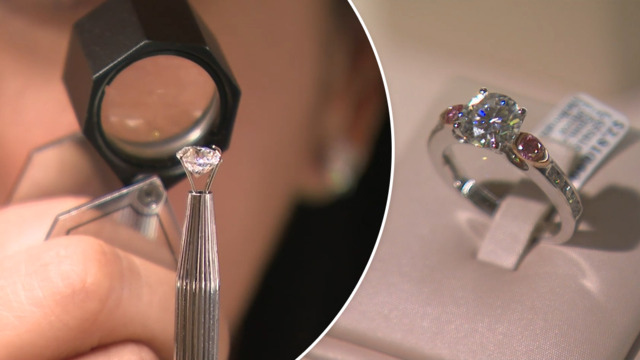
A lab grown diamonds sparkle depends largely on how its facets interact with light. Well-cut stones reflect light efficiently, producing brightness, colored flashes, and lively reflections as the jewelry moves.
Poor proportions can make either natural or laboratory-grown diamonds appear dull.
For round brilliant diamonds, review the cut grade alongside polish and symmetry. Fancy shapes, including oval, pear, emerald, and radiant cuts, require closer visual inspection because their light patterns vary.
An oval diamond, for example, may show a dark area across its center known as the bow-tie effect. Some contrast is normal, but a prominent dark band can affect its appearance.
Clarity deserves similar attention. A diamond graded VVS1 isn’t necessarily more attractive to the naked eye than a well-chosen VS1 or VS2 stone.
Instead of automatically paying for the highest clarity grade, inspect magnified images and normal viewing videos. Pay attention to visible inclusions and their location.
Diamond Grading Reports Are Worth Reading Carefully
Independent grading documentation helps buyers understand exactly what they’re purchasing.
The International Gemological Institute (IGI) evaluates laboratory-grown diamonds using the familiar 4Cs: cut, color, clarity, and carat weight.
The Gemological Institute of America (GIA) introduced a different approach in October 2025. Its updated quality assessments classify qualifying colorless to near-colorless laboratory-grown diamonds as Premium or Standard rather than using the traditional color and clarity grading terminology.
This distinction matters when comparing diamonds with reports from different laboratories.
Before purchasing, check the report number, diamond measurements, origin identification, and any disclosed treatments. Confirm the report directly through the issuing laboratory’s verification service.
Remember that a grading report describes the gemstone. It doesn’t establish its retail value, provide an insurance appraisal, or guarantee a future resale price.
Resale Value Deserves Realistic Expectations
Natural diamonds have established secondary markets, although resale offers can fall significantly below retail prices.
Laboratory-grown diamonds may have even more limited resale opportunities. Their secondhand prices are affected by the availability and pricing of newly manufactured stones.
Neither type should automatically be considered a financial investment.
For someone planning to keep an engagement ring for decades, design and personal meaning may matter more than resale expectations.
Buyers interested in future upgrades should ask for written details of any trade-in or exchange policy before making a purchase.
Ring Settings Affect Everyday Durability
Both diamond types have a hardness of 10 on the Mohs scale, making them highly resistant to scratching. However, neither is impossible to chip. A sharp impact can damage exposed edges or pointed corners.
A four-prong solitaire offers an open appearance, while a six-prong design provides additional points of support. Bezel settings surround the diamond’s edge with metal, offering greater protection from accidental knocks.
Pear and marquise diamonds benefit from settings that protect their pointed ends.
Metal selection also influences maintenance. Platinum and gold are both suitable for engagement rings, although their wear characteristics and upkeep differ.
Consider how the engagement ring will sit beside a wedding band. Certain low-profile settings prevent a straight wedding band from sitting flush against the ring.
Planning for this early can avoid an unexpected gap between the two pieces.
Buying a Diamond Ring in Spain: Details to Confirm
Buyers in Spain should compare more than photographs and advertised prices.
When researching retailers such as Novita Diamonds, examine the diamond’s grading documentation, precise measurements, and finished ring specifications.
For online purchases, confirm the full price in euros, applicable VAT, insured delivery arrangements, and any additional import costs if the order ships from outside the European Union.
Check resizing options, return conditions, and warranty coverage. Customized jewelry may have different cancellation or return conditions, so written confirmation is particularly useful.
Ask for videos recorded under different lighting conditions rather than relying entirely on studio photographs.




 Greetings! I'm Richard Black, an accomplished and versatile freelance professional with a passion for delivering top-tier solutions to clients worldwide. With a diverse background and years of experience, I've honed my skills and am committed to helping individuals and businesses achieve their goals.


